Making things, infinite games, and Fred Brooks

Caterina’s post “Make Things” is so awesome and spot-on. You should read it. Here’s a taste:

There are so many conferences these days, so many voluble, charismatic leaders, and so much noise. I talk to a lot of entrepreneurs in their 20s who are knowledgeable about the valuations various Y Combinator startups have attained, know the names of all the angel investors in the Valley, have in-depth knowledge of the Facebook diaspora and their doings, have opinions on various Zynga acquisitions, and know exactly how to get Andrew Mason on the line…it boggles the mind. These are good things to have in your tool kit. But I want to hear about things out there that they love. About loving the thing they’re building. There’s less of that.

I think part of what Caterina is saying is that pure focus on networking and IPOs and fundraising and valuations and acquisitions neglects the core sense of play that got most of us into this world in the first place.

This is something I was thinking about earlier this week, when I was talking with a team at Etsy about our mission and values and the importance of a sense of play came up. On that theme, I suggested that the folks in the room read James Carse’s Finite and Infinite Games: A Vision of Life as Play and Possibility (a book Caterina recommended to me years ago). I won’t summarize it here (that’s your second reading assignment of this post!) but you can cheat a little with Wikipedia:

In short, a finite game is played with the purpose of winning (thus ending the game), while an infinite game is played with the purpose of continuing the play.

The inside cover of the book gives you a little more flavor:

The rules of the finite game may not change; the rules of an infinite game must change.

Finite players play within boundaries; infinite players play with boundaries.

Finite players are serious; infinite games are playful.

A finite player plays to be powerful; an infinite player plays with strength.

A finite player consumes time; an infinite player generates time.

The finite player aims for eternal life; the infinite player aims for eternal birth.

(I see Etsy and the dynamics of the community that drive it as having strong characteristics of Carse’s “infinite game.” Running any good company is like an infinite game, which is why this Onion story is funny: “Corporation Reaches Goal, Shuts Down.” This may be the subject of another post.)

When I think about what motivates me and attracts me to companies and people in my life, it’s always been the same sense of joy in creation that Fred Brooks described so eloquently in The Mythical Man-Month, the joy that Caterina wants to hear from more entrepreneurs. Brooks’ book is primarily known for identifying and explaining the basic fallacies in project planning that give the book its name and a law named after Brooks. It’s rarely (if ever) credited as such, but I think it’s really a paean to creativity and the inherent problems encountered when trying to break what is essentially creative work and creative people into interchangeable functions and parts. It makes it all the more powerful that he wrote the excerpt below in 1974 (and led with it on page 7), long before most regular folks had even thought about computers, much less that making them work was even remotely creative (note the pinball machine and jukebox references!):

Why is programming fun? What delights may its practitioner expect as his reward?

First is the sheer joy of making things. As the child delights in his mud pie, so the adult enjoys building things, especially things of his own design. I think this delight must be an image of God’s delight in making things, a delight shown in the distinctness and newness of each leaf and each snowflake.

Second is the pleasure of making things that are useful to other people. Deep within, we want others to use our work and to find it helpful. In this respect the programming system is not essentially different from the child’s first clay pencil holder “for Daddy’s office.”

Third is the fascination of fashioning complex puzzle-like objects of interlocking moving parts and watching them work in subtle cycles, playing out the consequences of principles built in from the beginning. The programmed computer has all the fascination of the pinball machine or the jukebox mechanism, carried to the ultimate.

Fourth is the joy of always learning, which springs from the nonrepeating nature of the task. In one way or another the problem is ever new, and its solver learns something: sometimes practical, sometimes theoretical, and sometimes both.

Finally, there is the delight of working in such a tractable medium. The programmer, like the poet, works only slightly removed from pure thought-stuff. He builds his castles in the air, from air, creating by exertion of the imagination. Few media of creation are so flexible, so easy to polish and rework, so readily capable of realizing grand conceptual structures…

Yet the program construct, unlike the poet’s words, is real in the sense that it moves and works, producing visible outputs separately from the construct itself. It prints results, draws pictures, produces sounds, moves arms. The magic of myth and legend has come true in our time. One types the correct incantation on a keyboard, and a display screen comes to life, showing things that never were nor could be.

Programming then is fun because it gratifies creative longings built deep within us and delights sensibilities we have in common with all men.

I, along with Anil, am optimistic that we can make this mindset the default.
Keynote at Railsconf

I did a keynote at Railsconf yesterday entitled “Optimizing for developer happiness.” Huge thanks to Ben Scofield and Chad Fowler for the invite. It was a blast!

Below is the video and here are the slides on Slideshare.

I’ve got a longer post in me that builds on the themes in the talk — hoping to get that up in the next couple of weeks!

Update: just found a talk called “Optimize for Happiness” by Tom Preston-Werner (Github co-founder) about optimizing for happiness vs. money. Tom’s talk definitely pre-dated mine and looks at happiness from a somewhat different point-of-view. Definitely worth reading/watching.

The scourge of PowerPoint

Anyone who worked with me and others on putting the early hack days together at Yahoo! knows that one of the rallying cries was “No PowerPoint!” I’m pretty sure that the first invitation sent around inside Yahoo! back in 2005 said that explicitly, and presenters who started out with PowerPoints at those early hack days were enthusiastically booed. This theme continue to be reflected in future hack days, like the one we put together with Techcrunch just last year. The “No PowerPoint!” stance was a reflection of what I had seen or heard about in a number companies (not just Yahoo!) — seemingly endless twiddling with slide decks, with a disproportionate amount of energy devoted to aligning squares and choosing clip art. At its most pernicious, entire teams become obsessed with “the deck” and lose all sense about what they are actually trying to accomplish.

(And don’t get me wrong, I really love artfully-done PowerPoint or Keynote presentations. It’s absolutely possible and the best slide decks inspire and motivate.)

So, I particularly enjoyed this bit in Nokia CEO Stephen Elop’s remarkable “burning platform” memo:

At the lower-end price range, Chinese OEMs are cranking out a device much faster than, as one Nokia employee said only partially in jest, “the time that it takes us to polish a PowerPoint presentation.” They are fast, they are cheap, and they are challenging us.

“Only partially in jest.” Ouch.

(Thanks to @finitor for his tweet!)

How we manage development and operations at Etsy

I just found a new reason to love Quora: questions people ask can spur you to write about topics you’ve had kicking around in your head for some time. Such was the case with this one:

How does Etsy manage development and operations?
Etsy seems to have scaled far and fast, whilst continuing to add new features; how is all this managed – is there a strictly-defined process within which engineers operate, or is it a case of hiring clever people and letting them get on with it (Facebook-style)?

I posted my answer, and cross-posted it to the Etsy engineering blog, too.

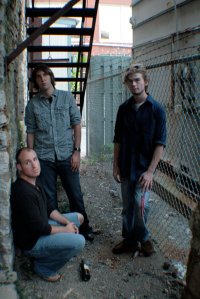
“We have the same name” – introducing the Switchmen

Recently, I got an email with the subject, “We have the same name,” and it was signed (as you might guess) “Chad Dickerson.” This was my “Google Me” moment.

The other Chad Dickerson lives in Lexington, Kentucky and has a band called Switchmen. Chad handles guitar and vocals. You can find out all about them here:

As those bards from Australia once sang, It’s a long way to the top / if you wanna rock and roll.

Here’s wishing the Switchmen success, from one Chad Dickerson to another.

Unplugging

I’m headed out of town today and am planning to (mostly) unplug until January 10. I’m really, really looking forward to spending time with family, some quiet reflection/writing/guitar-playing, and lots of reading.

Why “mostly”? I have a feeling I’ll do things like fire up Netflix and upload photos from my travels to Flickr. I’m not planning to get anywhere close to Facebook, Twitter, or email.

So, see you online and elsewhere again on January 10! Happy holidays, everyone.

“A Word on Statistics,” by Wislawa Szymborska

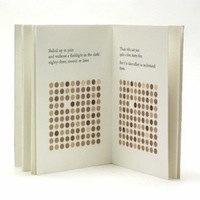
I signed in to Etsy a little while ago to do some holiday shopping and browsing, and I paged through the “items you might like” automated recommendation module we have on our home page now. One of the recommendations was a letterpress book containing the poem “A Word on Statistics,” by Wislawa Szymborska, made by Susan Angebranndt, owner of Green Chair Press.

A Word on Statistics

The title was intriguing, so I took a closer look. I had never heard of this poem or the poet, so I found it online and it is delightful.  I spend a lot of time these days exercising my left brain (the logical, analytical side) but I try to keep my right brain supple by continuing to read poetry and literature, too.  A poem like this brings both of those modes of thinking together quite beautifully.  Of course, I shared this serendipitous discovery (delivered to me using statistical methods!) to the 80+ folks in my Etsy Circle by favoriting it, which puts it in my activity feed on Etsy (we launched Circles and Activity Feeds at Etsy earlier this week).  This series of events was satisfying on so many levels!

Check out the Wikipedia page for Wislawa Szymborska, who won the 1996 Nobel Prize for Literature and also wrote “Pi,” which is featured in another beautiful letterpress book made by Susan at Green Chair Press. Here’s the poem:

A WORD ON STATISTICS

by Wislawa Szymborska
(translated from the Polish by Joanna Trzeciak)

Out of every hundred people,
those who always know better:
fifty-two.

Unsure of every step:
almost all the rest.

Ready to help,
if it doesn’t take long:
forty-nine.

Always good,
because they cannot be otherwise:
four — well, maybe five.

Able to admire without envy:
eighteen.

Led to error
by youth (which passes):
sixty, plus or minus.

Those not to be messed with:
four-and-forty.

Living in constant fear
of someone or something:
seventy-seven.

Capable of happiness:
twenty-some-odd at most.

Harmless alone,
turning savage in crowds:
more than half, for sure.

Cruel
when forced by circumstances:
it’s better not to know,
not even approximately.

Wise in hindsight:
not many more
than wise in foresight.

Getting nothing out of life except things:
thirty
(though I would like to be wrong).

Balled up in pain
and without a flashlight in the dark:
eighty-three, sooner or later.

Those who are just:
quite a few, thirty-five.

But if it takes effort to understand:
three.

Worthy of empathy:
ninety-nine.

Mortal:
one hundred out of one hundred —
a figure that has never varied yet.

Blog moved

I’ve been really busy with this other site I’ve been working on, and I haven’t been keeping my WordPress install up-to-date (which is dangerous), so I just moved everything to the WordPress.com infrastructure.  My blog is now at https://blog.chaddickerson.com/, thanks to the sub-domain mapping service that WordPress offers.

I also pointed my Feedburner-powered RSS feed to the new blog.  If you have any trouble with RSS or anything else, let me know!

NYC Century: the 55-mile route

(This will be probably be the last biking post for a little while, then back to regularly-scheduled tech! Thanks for indulging me.)

Before the NYC Century ride, I couldn’t find good maps of the 55-miler, so I tracked the route on my Garmin yesterday so I could share it later. I think we got off the official route a few times for short periods, but here it is (of course, it changes frequently and could be different next year):

Enjoy. I’ll add the elevation profile and all that when I have a little more time. There was about 1400 feet of climbing.

It was a really awesome ride, as much for the sense of community among the riders as the ride itself.

Urban biking in NYC

When I lived in the Bay Area, I fell in love with biking, both on dirt trails and on the road. I knew the dirt trails of the East Bay like the back of my hand and seeing the transcendent views of fog over the bay in the morning calmed my soul. I never tired of it, not even a little. I even saw the occasional cow or two. I made significant major life decisions on the hundreds of miles I covered with my friend Andrew. So when I moved to NYC, aside from missing friends out in California, I missed riding through those gorgeous hills more than just about anything else.

Over the past several weeks, I’ve been determined to get back in the saddle, so I signed up for the 55-mile ride in the NYC Century, which is tomorrow. To prepare, I’ve been running 2-3x a week and doing a training ride on the weekend. Urban riding is way different from what I’m used to, but it has its own kind of excitement and I’m having a blast exploring NYC on two wheels. Here are my past two rides (I’ve been biking to and from work, too, which is awesome in the fall weather):

1. Manhattan Loop (right around 30 miles)

This ride goes over the Brooklyn Bridge, up the east side to Harlem, down through Central Park, cut over to the greenway on the west side, down around the perimeter of Manhattan, and back across the Brooklyn Bridge. Going over the Brooklyn Bridge is a little like a video game as you dodge tourists who step into the bike lane to get the most scenic photos. The bike-and-pedestrian-only greenway on the East River stops around the United Nations and you have to get back out in regular traffic, and pedaling amongst the crush of taxis and pedestrians was a memorable experience that kept my blood pumping. Shooting down into Central Park at the north entrance was absolutely awesome (side note: the Great Hill in Central Park — which felt like a big climb relative to everything else — is only 135 feet above sea level). The greenway on the west side along the Hudson is really nice, too, though I almost wiped out when an elderly woman came barreling towards me with a “I don’t know how to stop this thing!” look (whew).

(I used Veloroutes to map this trip).

2. Brooklyn waterfront to Marine Park to Prospect Park (about 40 miles)

Beach at Jacob Riis ParkI took some photos along this route, which goes along the waterfront in Brooklyn along Gravesend Bay, out near Coney Island, through Sheepshead Bay, out to the Rockaways, Jacob Riis Park, Floyd Bennett Field (NYC’s first municipal airport), and Fort Tilden, then back up Bedford Avenue (the longest road in Brooklyn!) to Prospect Park. If urban decay and post-apocalyptic-Planet-of-the-Apes NYC are your cup of tea, you’ll get your money’s worth with Jacob Riis Park and Floyd Bennett Field, both of which have been beautifully neglected.

For this ride, I dusted off my Garmin Edge 305, which records all sorts of data about your ride, including speed, lat/long coordinates, elevation, heart rate, and calories burned. While this is a bit of overkill for my level of riding, I find that looking at all the data after the ride is fun for a data geek like me. I mean, who wouldn’t want to know the exact lat/long coordinates where you hit your peak heart rate? The data from the Edge can be loaded into a program like Ascent, where the data can be exported to a KML file, which is how I generated the map below.

http://maps.google.com/maps?f=q&source=embed&hl=en&geocode=&q=http:%2F%2Fwww.chaddickerson.com%2Frides%2F05-Sep-10.kml&sll=40.736852,-73.913956&sspn=0.461488,0.979156&ie=UTF8&ll=40.625255,-73.953697&spn=0.125237,0.176132&output=embed
View Larger Map

The 55-miler starts at 7:30am tomorrow in Prospect Park. Tonight, it’s early-to-bed for a fresh start.